


Malaysia is attracting and building data-centre capacity rapidly, but it has yet to show that the productive domestic layer needed to convert that infrastructure into recurring Malaysian business value, skilled work and exportable digital services is developing at the same pace.
Q2 growth and the data-centre boom
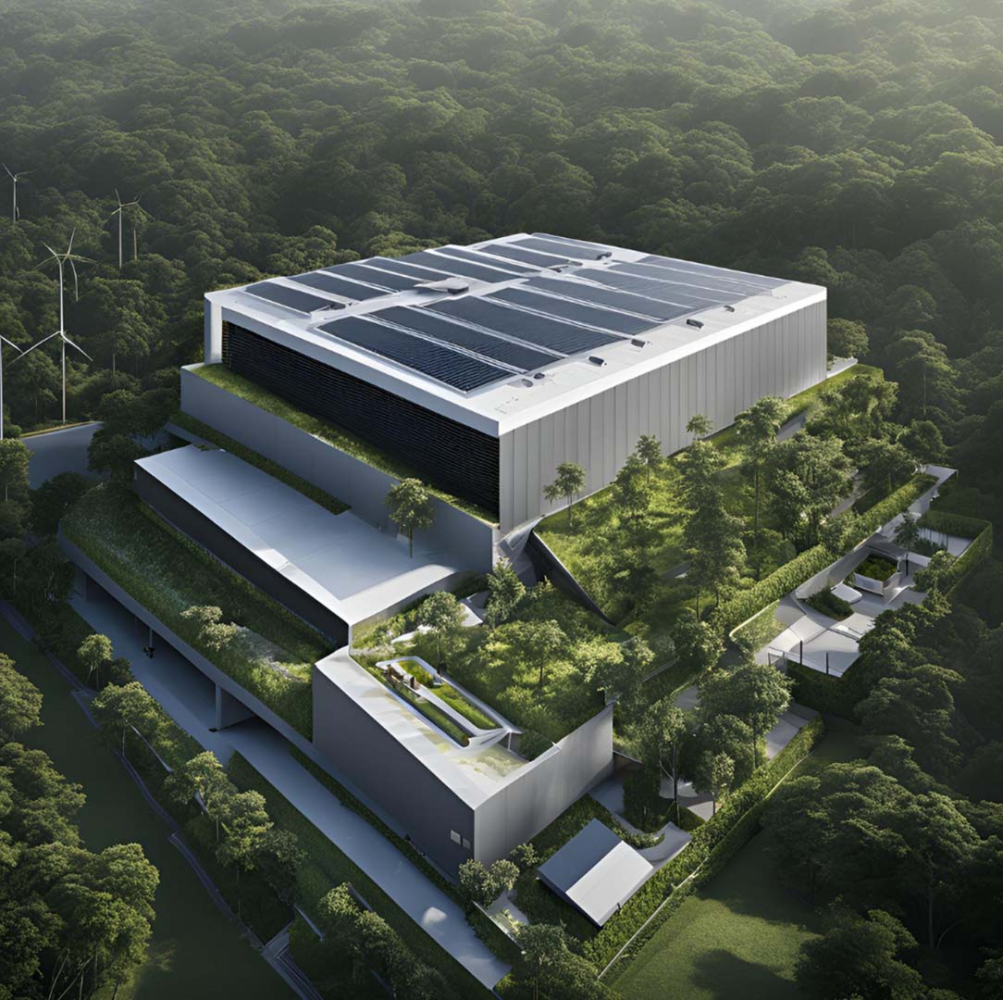
Malaysia’s economy expanded 5.8% year-on-year in the second quarter of 2026, faster than the 5.4% recorded in the first. Manufacturing grew 7.5%, driven by export-oriented electrical, electronic and petrochemical output. Mining and quarrying rebounded 10.2% on natural gas. Services, the largest employer, grew 5.4%. Construction grew 6.6%, and the Department of Statistics Malaysia specifically credited non-residential building activity, particularly data-centre construction projects, alongside specialised construction work, for holding that sector up.
It is, on its own terms, a strong quarter, and data centres were only one contributor among several. But construction activity is the easiest part of a data-centre boom to see and the least useful part to build a national strategy around. The harder questions sit further out. Will Malaysian firms obtain recurring higher-value work once the buildings are finished, or only a one-off construction contract? Will the computing capacity now being installed become affordable and usable for Malaysian businesses, or will it mainly serve the multinational tenants that commissioned it? Will local applications, services, intellectual property and export revenue be created around that capacity, or will Malaysia simply host infrastructure whose higher-value returns are captured elsewhere? And is the Government measuring any of this, or mainly measuring investment approvals and physical capacity?
What remains after construction
Johor makes the pattern easiest to see. Malaysia added roughly 450MW of live IT capacity between 2019 and 2024, and Johor’s live supply grew at a compound annual rate of approximately 145% over the same period from a low base, much of it pulled across the border after Singapore capped new data-centre construction in 2019. Malaysia has approved more than RM110 billion in multinational data-centre investment since 2021. That is a genuine achievement, and the construction, civil and electrical engineering, and professional-services work behind it is real economic activity.
It is worth being precise about what these figures measure. Approved investment is not the same as money already spent. A project can be announced, approved, under development, completed or live, and each stage represents a different amount of realised economic activity. Not every data centre is built primarily to run AI workloads either; a meaningful share of global capacity still serves ordinary cloud computing and storage, with AI a growing but still partial share of demand. The RM110 billion figure describes appetite and approval, not spending already committed to the ground.

Construction work is also, by definition, temporary. It employs large crews of Malaysian tradespeople, engineers and contractors for the months or years a facility takes to build, while generating business for local suppliers and service providers. But these benefits peak during construction and do not, by themselves, establish how much recurring Malaysian value remains once the facility becomes operational. A completed data centre, by contrast, is a capital-intensive, highly automated facility that requires a comparatively small permanent workforce, mostly technicians, security personnel and facilities engineers. Publicly available reporting does not yet show clearly how much of the boom translates from construction activity into lasting operational employment.
That is the tension the Sarawak state government named directly in July 2026. Premier Abang Johari Openg told an audience in Kuching that the state was moving away from approving data centres on the strength of its energy reserves alone. “Many companies want to establish data centres in Sarawak because we have abundant energy,” he said, “however, we have to be selective because data centres do not create many jobs.” His government’s stated concern was specific: these facilities, once operating, offer limited mass employment or skills transfer to the local population, and future approvals would instead weigh broader economic benefit and high-skilled local employment, with the state redirecting attention toward semiconductor manufacturing, advanced engineering and renewable-energy technology. Sarawak’s move is not a case against data centres. It is a case for making the land, power, water and incentives they consume do more work for Malaysians in return.
The wider accountability problem is straightforward to state. Malaysia has become highly effective at reporting approvals, capacity and construction activity. It has not shown the same discipline in reporting recurring Malaysian supplier revenue, permanent high-value employment, skills transfer, local intellectual property, affordable compute access or exportable digital services arising from these investments. That is not a claim that none of this exists. It is a claim that the present public investment narrative, and the reporting available to test it against, do not establish these outcomes clearly enough.
Building the productive economy above the data centres

This is the more important gap, and it sits above the data centres rather than beside them. Data centres are themselves part of digital infrastructure, not separate from it. The relevant distinction is between physical hosting and computing capacity on one side, and the productive digital layer that converts that capacity into business use, local capability and recurring economic value on the other.
That layer has a recognisable shape. Compute access sits at the bottom. Above it, firms can select and orchestrate AI models, build applications and agents, and turn them into services that businesses use and sell. These services are often metered partly through tokens, the units models process and generate, but tokens are a billing mechanism rather than a separate economic layer. The greater value lies in the applications, intellectual property and recurring services built on top of compute. This is the AI midstream between physical infrastructure and end users. Hosting the machines is not the same as building the economy that uses them.
Malaysian firms already participate in the construction end of this chain: electrical systems, cooling, facilities support. Evidence of Malaysian participation further up the chain is much thinner. More enduring value could be created if Malaysian firms built and sold model orchestration services, industry-specific AI applications and agents, Bahasa Malaysia and locally relevant applications, cybersecurity and trusted-data services, locally owned software and intellectual property, AI-enabled professional services, and exportable digital products. None of this requires owning a data centre. It requires being able to use one on reasonable terms.
Malaysia may now be taking a step in that direction. In July 2026, MDEC issued a Call for Partnership to establish the National AI Compute Exchange, an early-stage initiative still at the partner-selection stage, not an established success. As proposed, it would aggregate demand from government, businesses, SMEs, start-ups and researchers, and connect them with computing capacity, models and services from multiple providers, with the aim of reducing fragmentation and barriers to compute access for smaller Malaysian firms. Its planned components reportedly include a marketplace, AI aggregation, Agent-as-a-Service and a national AI Grid for sovereign compute and data.
The mechanism matters more than the list of components. If Malaysian firms can access compute affordably, select and orchestrate different models, and build and sell applications on top, Malaysia has a route to capturing recurring value beyond construction and hosting. If they cannot, the exchange becomes another platform announcement layered on top of the infrastructure story, useful as a demonstration of intent but not yet evidence of an economic layer that exists. Its value should eventually be judged by actual utilisation, affordability and access for Malaysian firms, SME and start-up participation, Malaysian supplier revenue, locally owned intellectual property, high-value employment, business adoption and exportable products and services, not by platform launch, enrolled partners or the amount of computing capacity it lists. The Government should not be allowed to treat the announcement of another platform as proof that this layer has already been built.
Preparing workers before disruption becomes unemployment
The same measurement gap runs through the workforce story. AI is likely to reshape tasks and skills within Malaysian jobs well before that shows up in unemployment or retrenchment statistics, and Malaysia needs a more anticipatory way of tracking that shift so that capability-building and worker transition happen together, not after the fact. Low unemployment does not resolve this: it shows people have work, not whether their qualifications are being used. DOSM’s Q1 2026 data put skill-related underemployment among tertiary-educated workers at 35.2%, a large, long-standing structural mismatch rather than evidence of a worsening quarter; the figure had in fact improved slightly. SOCSO’s Loss of Employment data add a further limit, since they record applications for unemployment benefits rather than every job lost, and do not tag applications by cause.
TalentCorp’s Impact Study of Artificial Intelligence, Digital, and Green Economy on the Malaysian Workforce, covering ten sectors employing 3.5 million people and producing roughly 60% of GDP, estimates that around 620,000 roles, about 18% of that core workforce, will be highly impacted by the combined AI, digitalisation and green-economy transitions within three to five years. That is not a forecast of AI-driven job losses. It indicates that roles and skill requirements may change materially under the combined transitions. It is, however, a clear signal that the shift is coming faster than Malaysia’s current statistics can track it.
MIT’s Iceberg Index offers a useful contrast in method, if not geography. Built as a skills-based simulation of the US labour market, it estimates that AI capability already overlaps with the skills behind 11.7% of US wages, concentrated less in visible technology roles than in back-office functions such as HR, finance, logistics and admin. That figure measures technical exposure, not actual displacement. Its relevance to Malaysia is methodological: mapping occupations against tasks and against what AI can already do could reveal exposure before it appears in unemployment data, rather than after.
Malaysia does not yet have its own version of that map. TalentCorp’s MyMAHIR platform and the Malaysia National Skills Registry are a real starting point; missing is the exposure layer connecting Malaysian occupations to Malaysian tasks to Malaysia’s own AI adoption. A Malaysian Workforce Transition Map, built on that base, would not predict who loses a job. It would show which tasks are changing, which adjacent occupations are realistic moves, and which training pathways are actually connected to employer demand rather than enrolment targets.
Measurement, however, is useful only if it changes what follows. A workforce transition map should guide employers and training institutions towards task-specific reskilling, job redesign and credible pathways into adjacent occupations, with programmes tied to actual employer demand rather than generic certification targets. The aim is not to preserve every task that AI may alter, but to give Malaysian workers a realistic route into the roles and capabilities that a more productive domestic AI economy will require.
From physical capacity to national value
Three responses follow, and the order in which Malaysia takes them matters. Data-centre approvals, incentives and access to scarce resources should become more selective and conditional on measurable Malaysian value, the way Sarawak has begun to demand, rather than granted on the strength of available land and power alone. The productive domestic layer above the infrastructure needs to be built with equal urgency, with the National AI Compute Exchange treated as a possible mechanism for doing so, whose outcomes must be measured rigorously rather than assumed from its existence. And Malaysia needs concise, anticipatory workforce intelligence, so that workers and training institutions can respond while tasks are changing, rather than waiting for SOCSO’s numbers to confirm what has already happened.
The domestic digital economy, not workforce mapping, has to be the centre of gravity, because it is the layer that determines whether the other two responses have anything durable to work with. This is not a choice between investment and workers, or between data centres and AI. Malaysia can become a major data-centre location without becoming a major creator of AI-enabled economic value; the two outcomes are not the same thing, and the first is being measured and promoted much more visibly than the second. Whether the boom becomes a national advantage will depend not merely on how much capacity is switched on, but on what Malaysian businesses and workers are enabled to build on top of it.\
Working source notes
· Department of Statistics Malaysia (DOSM), Advance GDP Estimates, Second Quarter 2026, 17 July 2026.
· Department of Statistics Malaysia (DOSM), Sorotan Pasaran Buruh / Labour Market Review, First Quarter 2026 (published May 2026) — skill-related underemployment rate.
· Sarawak Daily, “Sarawak Shifts Focus To High-Value Tech Over Data Centres,” 19 July 2026.
· ISEAS-Yusof Ishak Institute, Lim Kok-Tiong, “Augmentation or Elimination: The Potential Impact of AI on the Malaysian Economy,” ISEAS Perspective 2026 No. 41, 2 June 2026 — RM110 billion data-centre investment figure (via InvestKL, March 2025).
· TalentCorp Malaysia, Impact Study of Artificial Intelligence, Digital, and Green Economy on the Malaysian Workforce, Volume 1 — 620,000 highly-impacted roles estimate, sector scope, MyMAHIR / Malaysia National Skills Registry.
· MIT, The Iceberg Index (Project Iceberg), skills-based labour market exposure model — 11.7% of US wage value figure.
· Social Security Organisation (SOCSO/PERKESO), Loss of Employment data and reporting scope.
· DC Byte, Global Data Centre Index 2025 — national ~450MW live capacity added 2019–2024; Johor’s ~145% CAGR live-supply growth over the same period.
· MDEC, Call for Partnership, National AI Compute Exchange, July 2026 — proposed components including marketplace, AI aggregation, Agent-as-a-Service and national AI Grid
This article is part of 27Advisory’s Rebuilding Humanity 2.0 framework, a nine-pillar knowledge architecture for navigating Malaysia’s most consequential structural transitions. The issues explored in this piece connect directly to Pillar #01: Deep SEZ integration and AI commons. To explore 27Advisory’s sectoral research and advisory work, visit our Rebuilding Humanity 2.0 page.